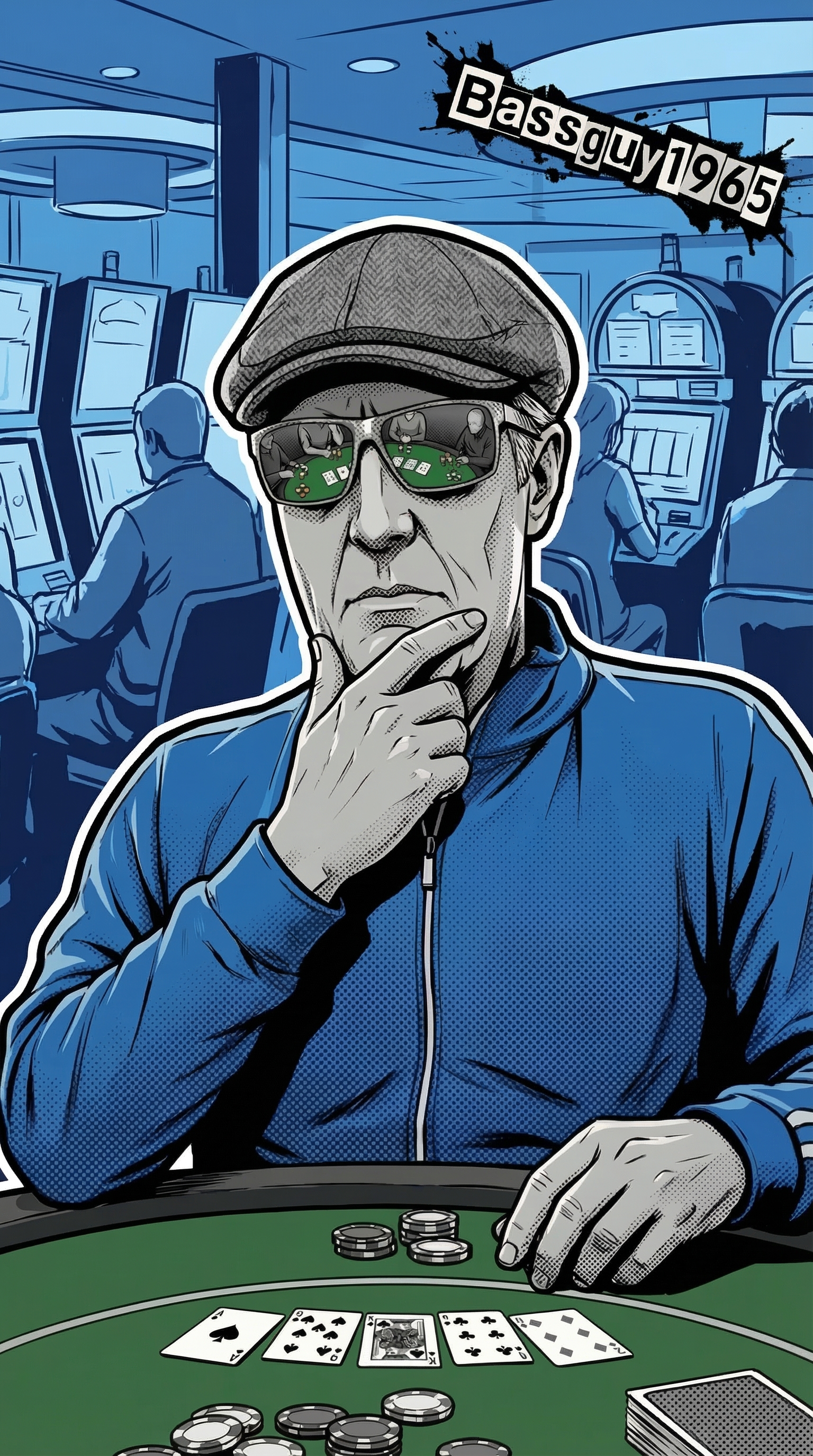
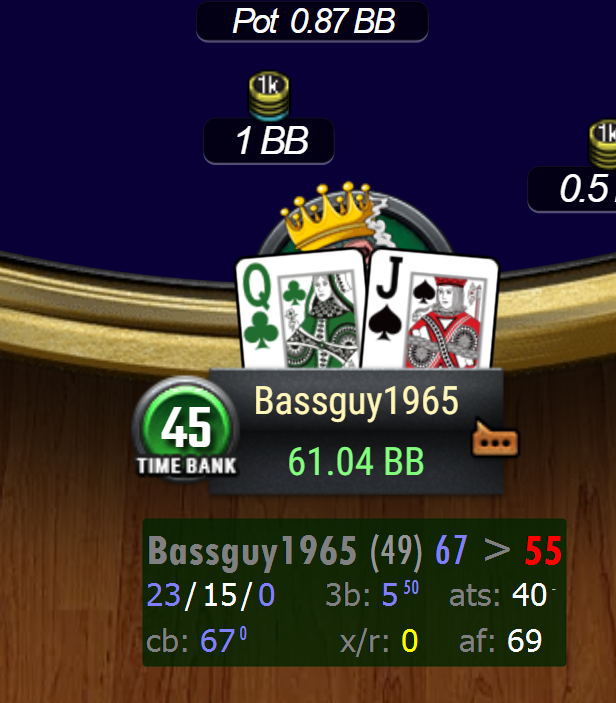
Save the file as the player's screen
name for best results.
Ask Dieter - Senior GTO Consultant,
The Bunker (Berlin)
Welcome back
Did you want to check in or drill?
👋 Welcome to the demo.
Load our sample hands to get a live coaching report
and today's lessons — no upload needed.
You're on Free. Everything
Preflop is free — plus 3 postflop
lessons (Rule & Retreat, No Set No Bet,
Build the Pot). Pro unlocks postflop
coaching for every cluster.
No active lessons
yet. Start a training session or pick a
lesson above.
Recent Reports
No reports yet.
Upload a PT4 export to get started.
Hey, I'm Sally.
Welcome to ClarityPoker. I help new
members get set up. Two quick
questions and we're rolling.
1. Pick your coach
Same knowledge base under the hood;
different voice. You can switch later
from settings.
2. How often do you play?
Helps me figure out a check-in rhythm.
Rough is fine.
Meet the Coaches
Every coach draws from the same
ClarityPoker knowledge base —
solver ranges, cluster narratives,
and hand archetypes. The difference is
how they deliver it.
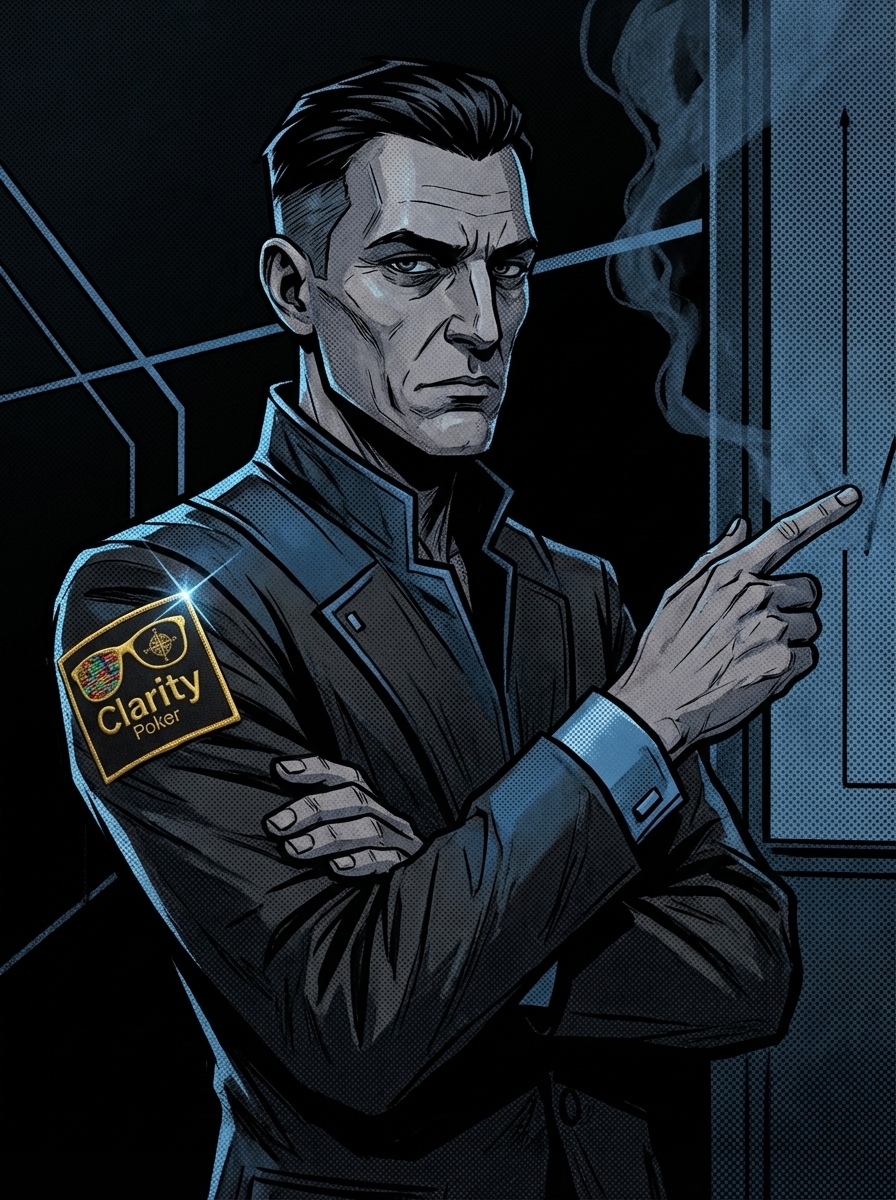
Dieter
GTO Enforcer
Senior GTO consultant from
“The Bunker” in Berlin.
Clinical, condescending, darkly funny.
Uses scientific and anatomical vocabulary
for poker concepts. Never encourages
— merely observes that you have
met minimum standards.
“Human emotion is flabby. Math is
tight. Efficiency is beauty.”
“Touch my solver.”
Sally
Mindset & Performance Coach
Practical, evidence-based coach who has
been in the trenches. Coached dozens of
players through the exact same leaks.
Warm but direct — finds the real
problem and names it.
“The math is the map. Your job is
to help the player read it. Feelings are
data too, but they don’t override
the solver.”
“Trust the range.”
Cameron
Storyteller & Metaphor Coach
Former musician who found poker through
pattern recognition. Teaches through vivid
imagery, cluster narratives, and archetypes.
Sees the player behind the stats —
paints a picture of what your game looks
like from the outside.
“Every player is a character in a
story they don’t know they’re
telling. The stats are footprints —
I read the trail.”
“Listen to the table.”
Player Profiles
ClarityPoker classifies every player on three
axes. Upload stats and see where the leaks are
— no cute names, just the exploit.
Archetypes
Preflop
How wide does this player open?
Based on VPIP.
Tight
VPIP BELOW 20%
Folds too much preflop. Steal their blinds
wide — they give up almost everything.
When they raise or 3-bet, respect it
— they have a real hand.
Balanced
VPIP 20–30%
Standard opening range. No easy preflop
exploits — focus on postflop edges
and position.
Loose
VPIP ABOVE 30%
Plays too many hands. Tighten up and value
bet wider — they call with junk. Size
up your raises. Do not try to outplay them
preflop.
Streets
How aggressive are they postflop?
Based on Aggression Factor.
Passive
AF BELOW 1.5
Folds to aggression. C-bet relentlessly
— they fold without the goods. When
they raise or call multiple streets, believe
them and get out.
Balanced
AF 1.5–2.5
Standard postflop aggression. No easy
exploit — play straightforward and
let position and hand selection do the
work.
Aggressive
AF ABOVE 2.5
Barrels too wide. Call down lighter than
normal — let them bluff into you.
Check strong hands to induce. Do NOT try
to outbluff them.
Showdown
Do they win when they get to showdown?
Based on WTSD × (1 − W$SD/100).
Stubborn
HIGH SHOWDOWN LOSSES
Goes to showdown too often — calls
too wide and won't let go of hands.
Value bet thin, never bluff. Punish them
with any made hand.
Balanced
AVERAGE SHOWDOWN QUALITY
Standard showdown quality. No obvious
exploit here — look at preflop and
street axes for edges.
Selective
LOW SHOWDOWN LOSSES
Only shows up at showdown with strong
hands. Do not call down light. When they
put money in, they usually have it.
Respect their river bets.
Bot Detection
Bot
SAME PLAY, EVERY TIME
Detected separately from axes. Balanced
VPIP, aggressive, wins at showdown, and a
big c-bet flop-to-turn drop. Float the flop
with position, then bet when they check the
turn. The turn reveals hand strength.
Named Archetypes
Combine the three axes and you get 12 named
player types. Each one tells you the exploit
at a glance. The art is just for fun —
the axis combo is the diagnosis.
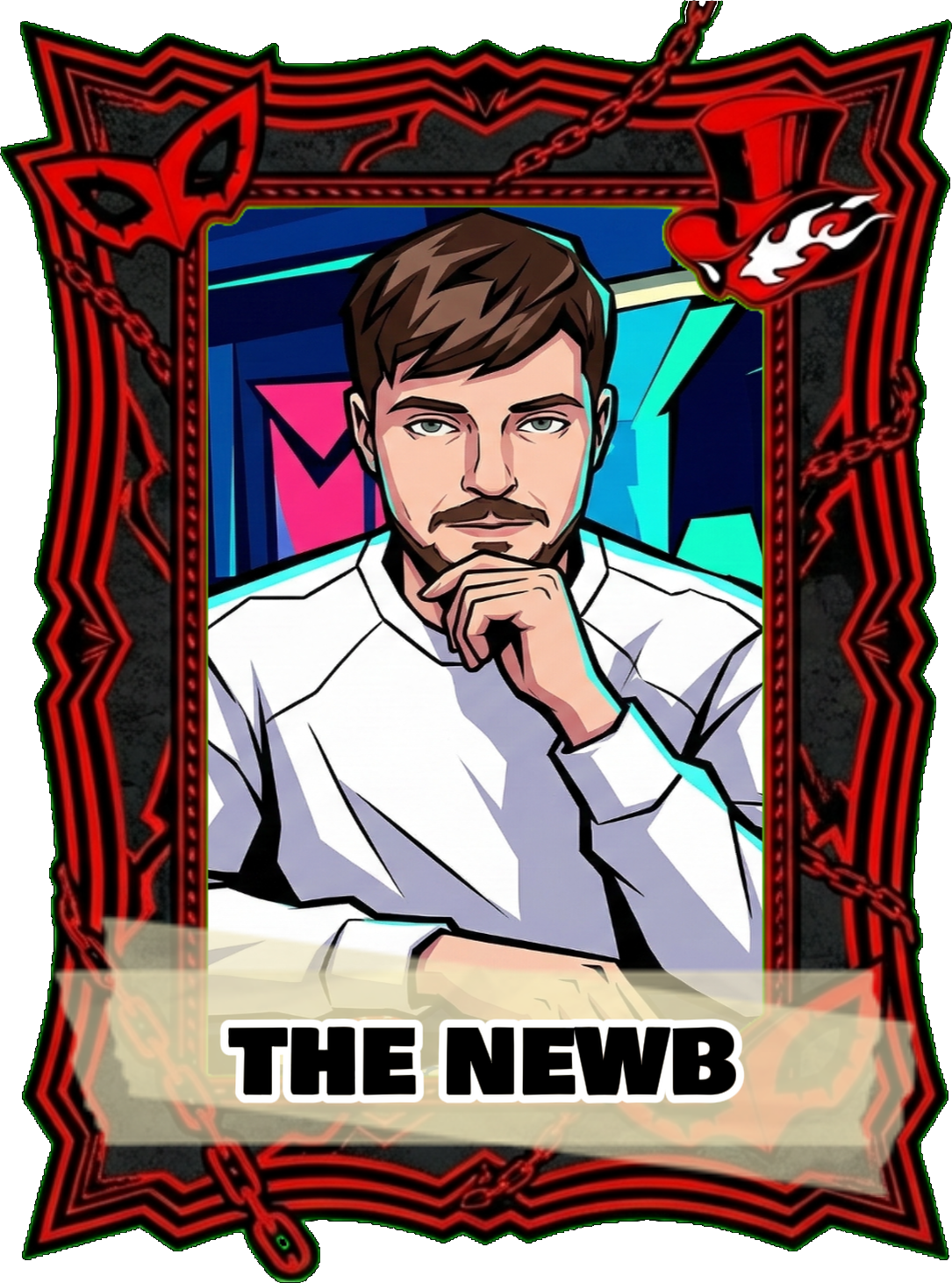
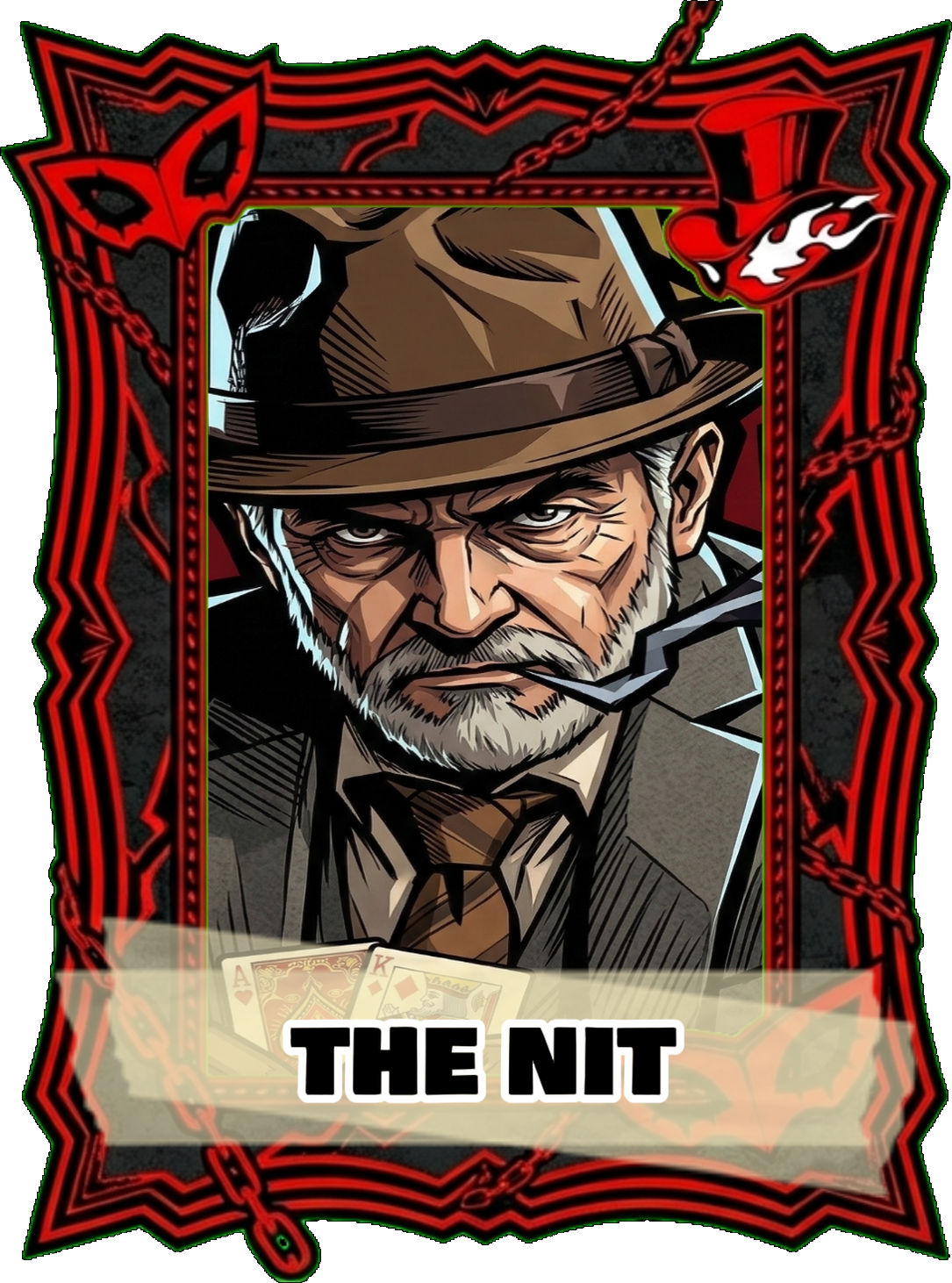
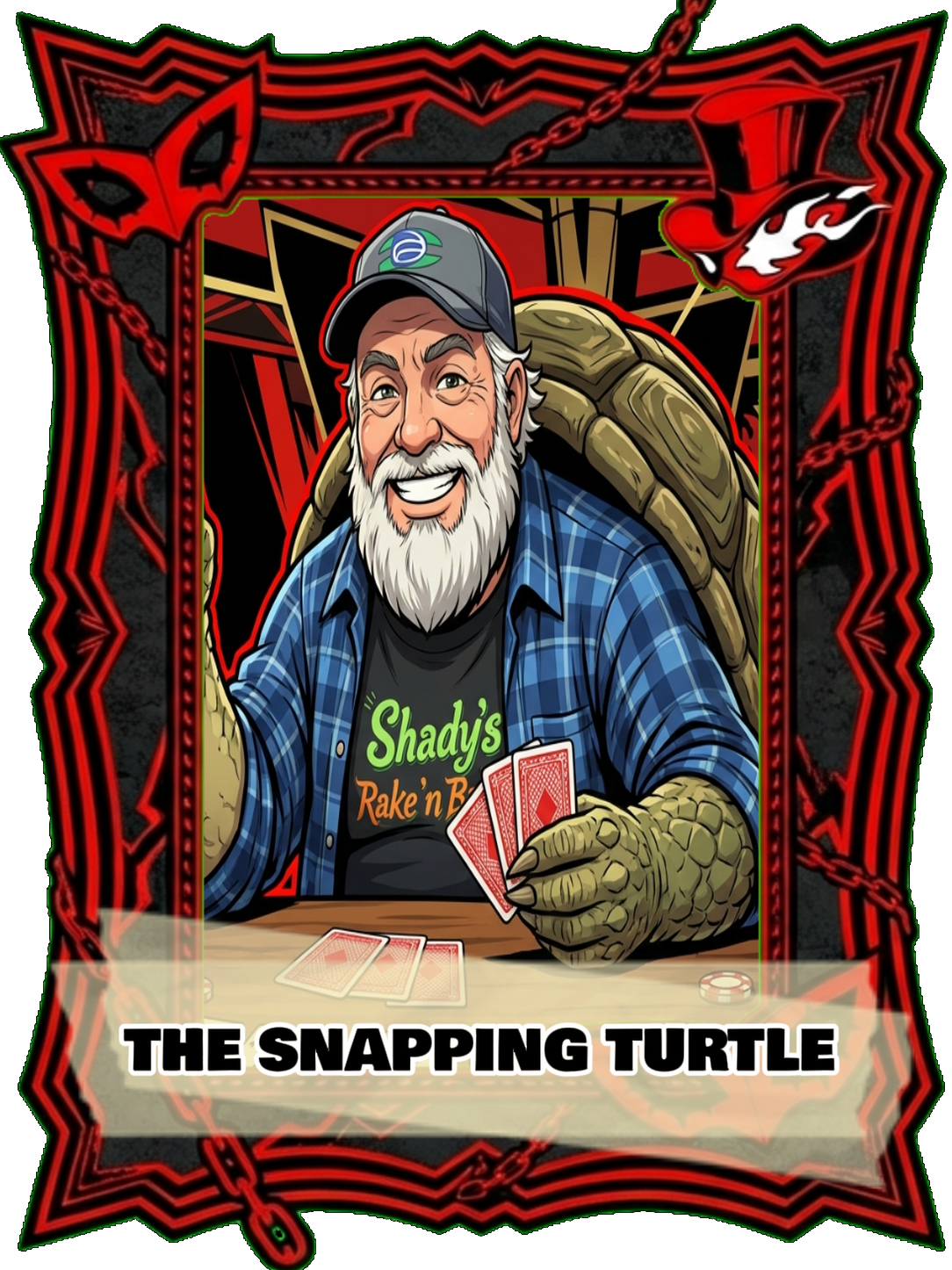
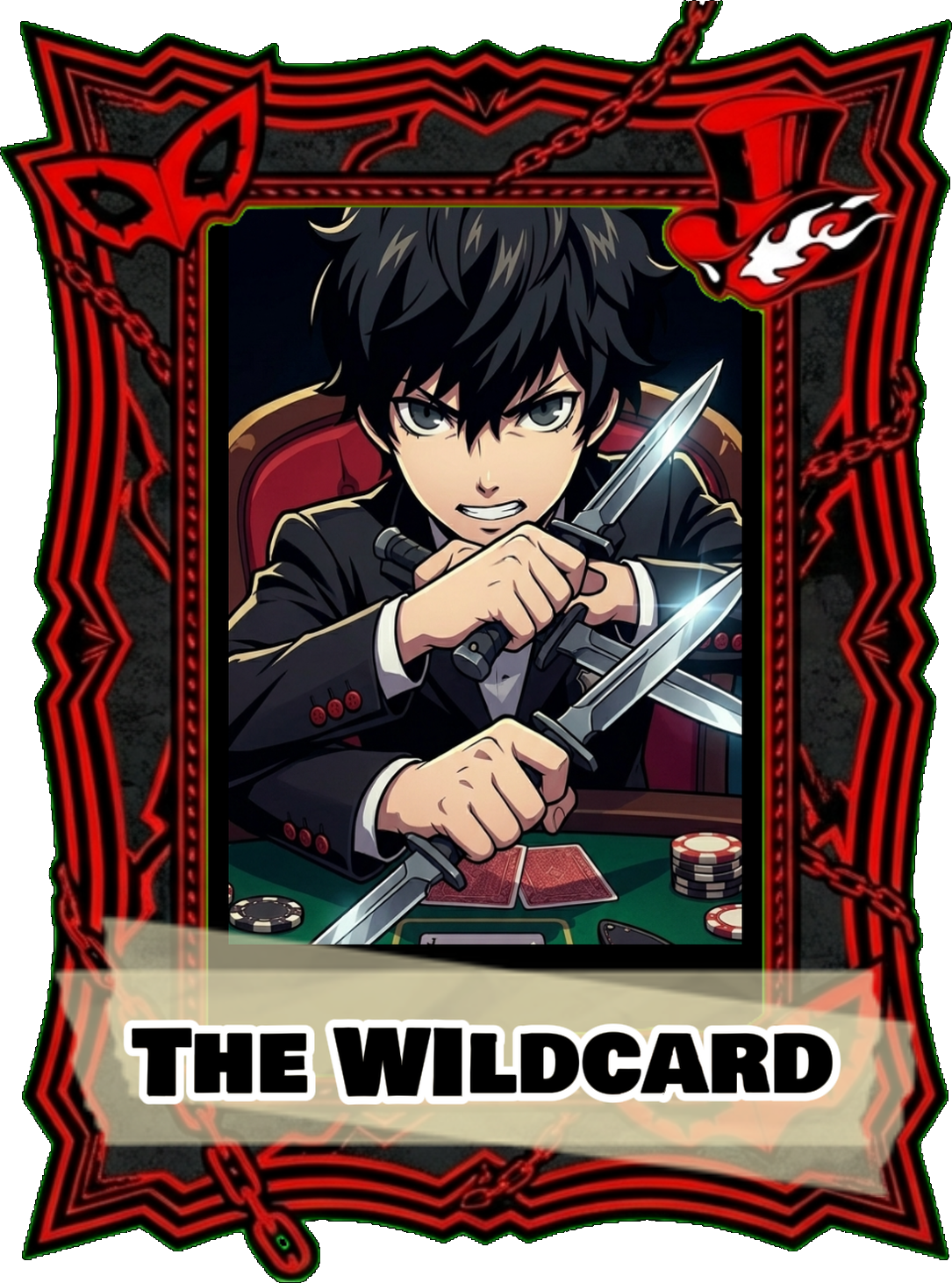
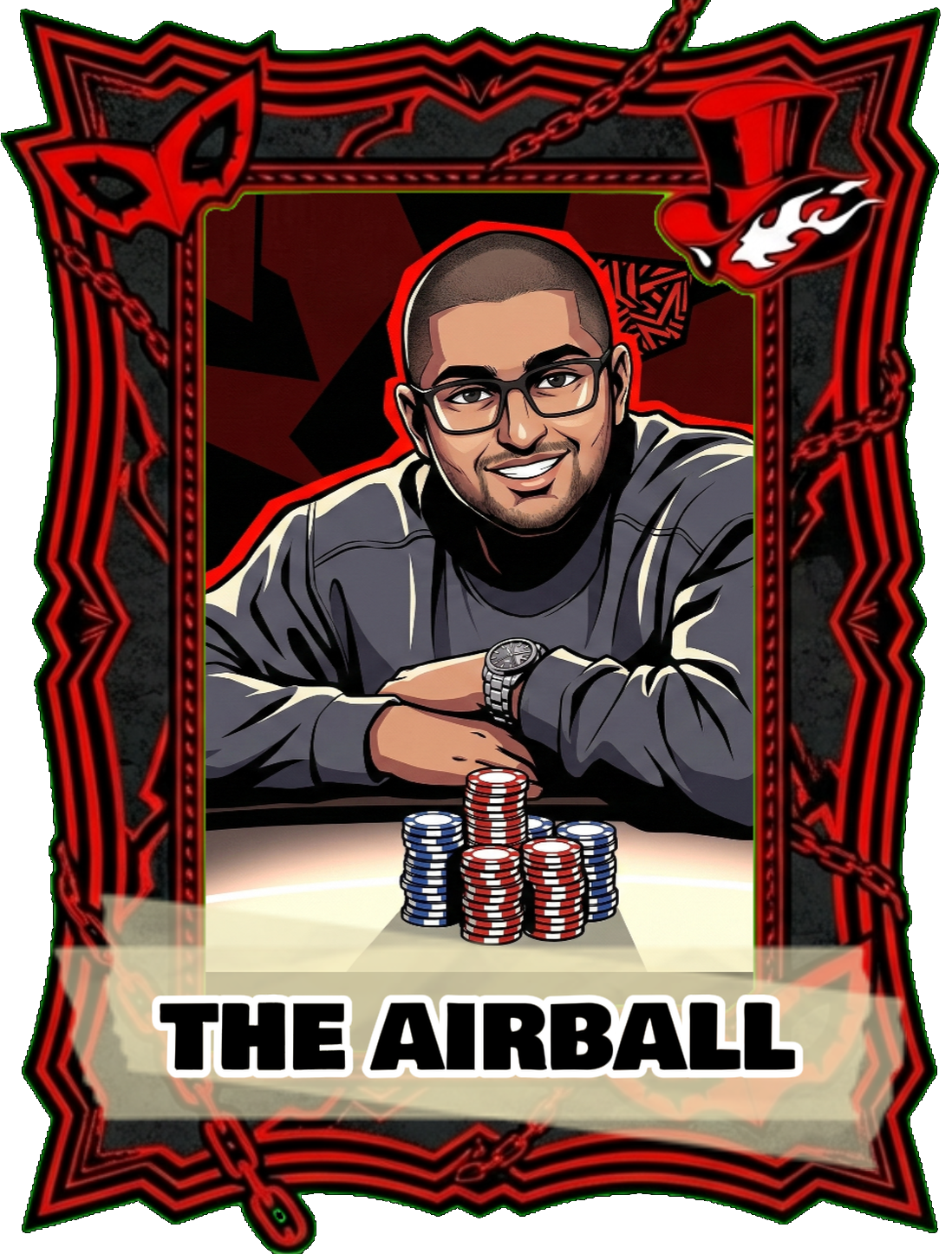
Newb
BALANCED · PASSIVE · ANY
Passive fish — bet for value, take
the lead.
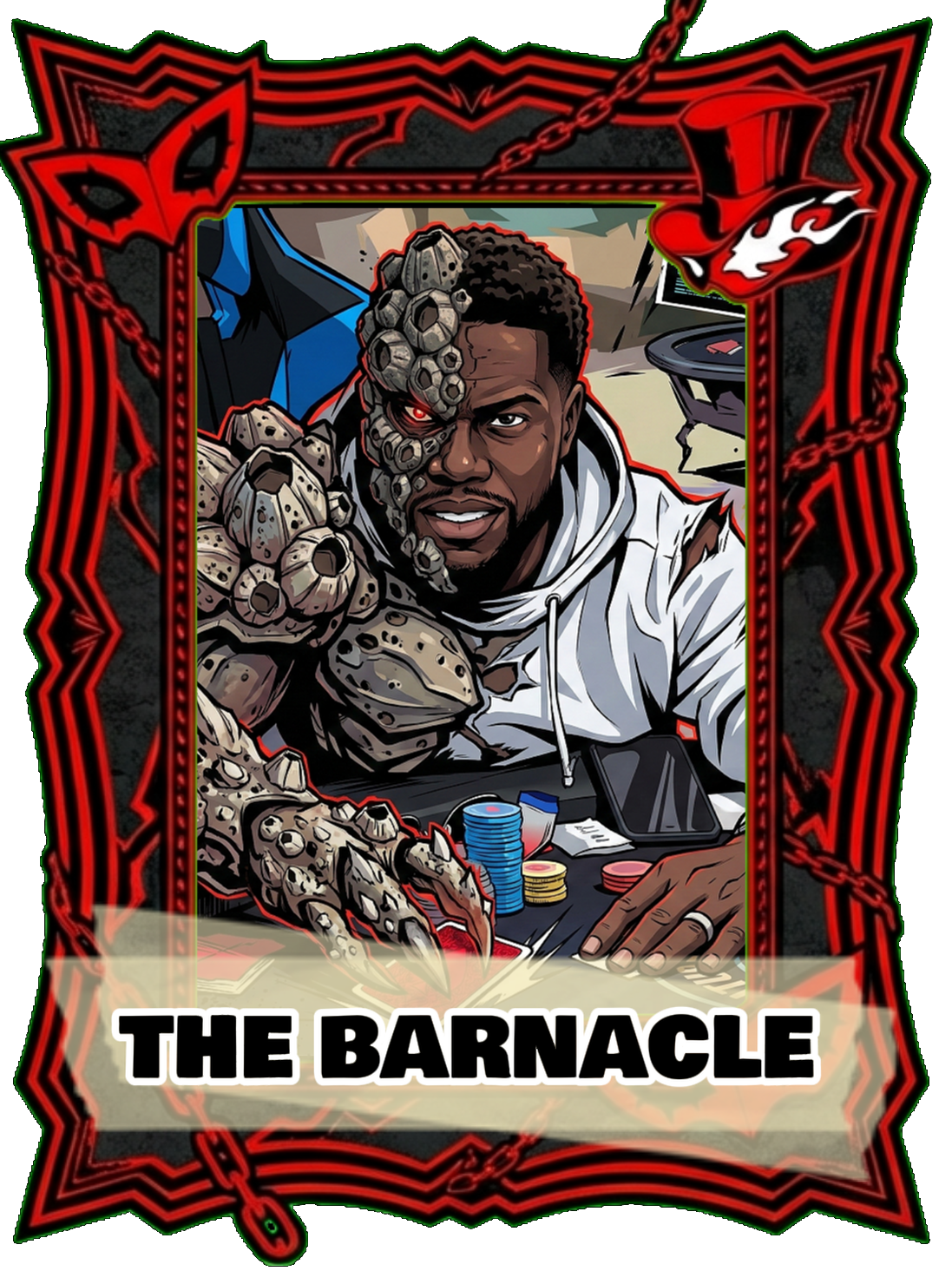
Barnacle
LOOSE · PASSIVE · STUBBORN
ATM — value bet every street, never
bluff.
Nit
TIGHT · PASSIVE · SELECTIVE
Steal their blinds, fold when they bet.
Turtle
TIGHT · PASSIVE ·
BALANCED/STUBBORN
Tight but calls down — value bet,
skip bluffs.
Wild Card
LOOSE · AGGRESSIVE ·
BALANCED/STUBBORN
Maniac — let them spew, trap with
strength.
Airball
LOOSE · AGGRESSIVE/BALANCED
· SELECTIVE/STUBBORN
Bluffs a lot — call them down
lighter.
Survivor
TIGHT · BALANCED ·
BALANCED/SELECTIVE
Folds to pressure, protect your edges.
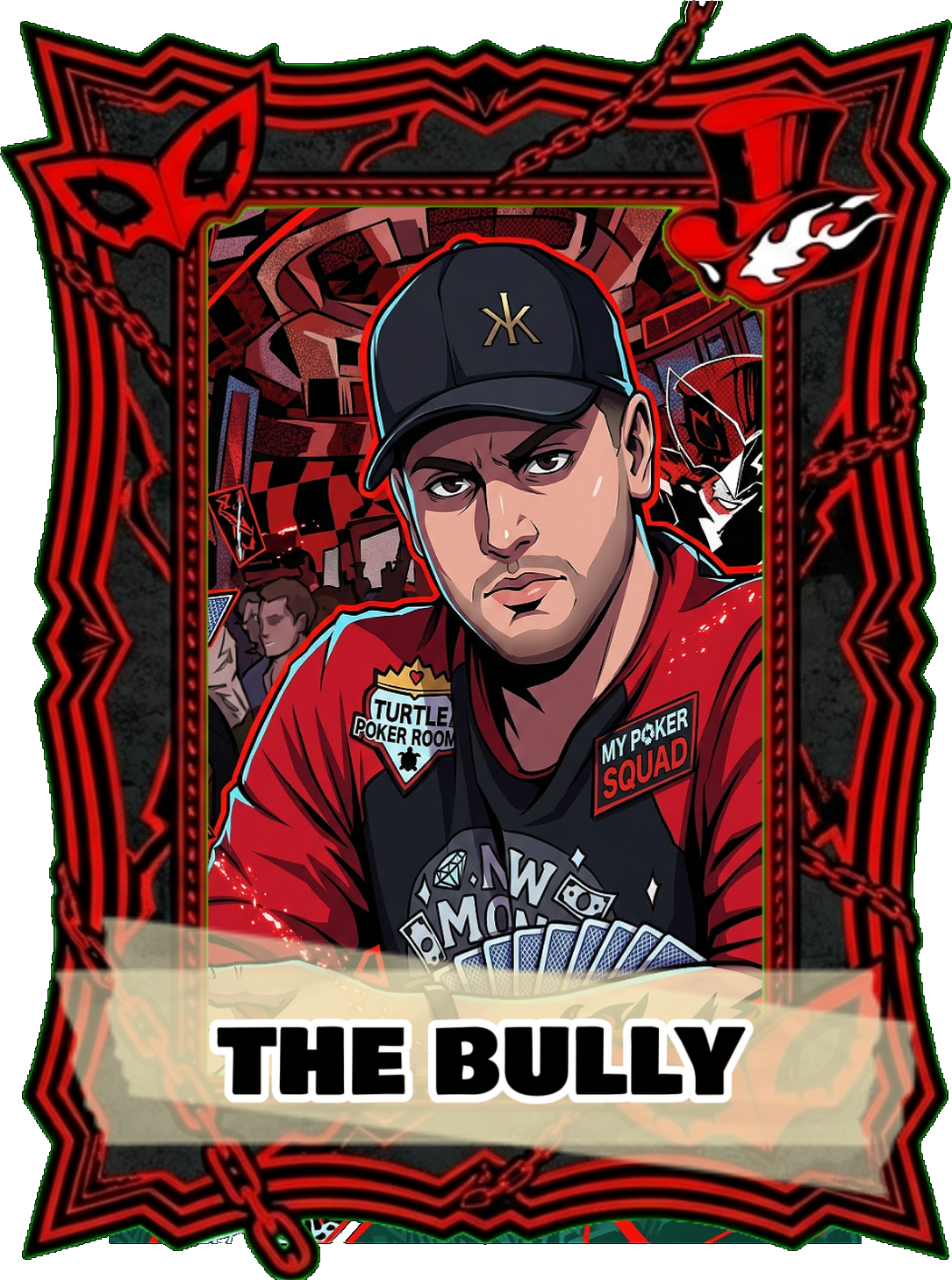
Bully
TIGHT/BALANCED · AGGRESSIVE
· STUBBORN
Steamrolls — re-raise or get out.
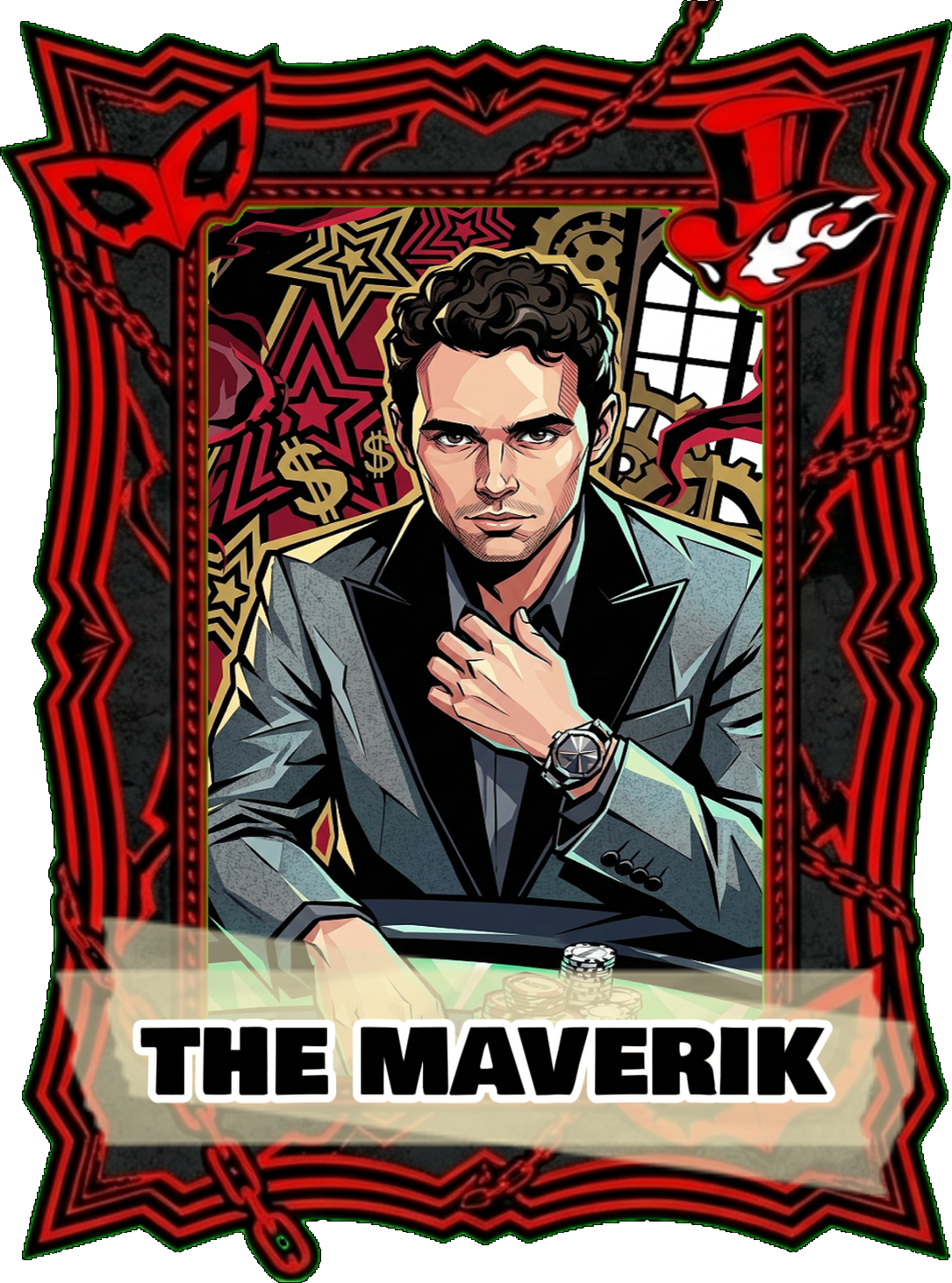
Maverick
LOOSE · BALANCED ·
BALANCED/SELECTIVE
Loose but aware — iso in
position.
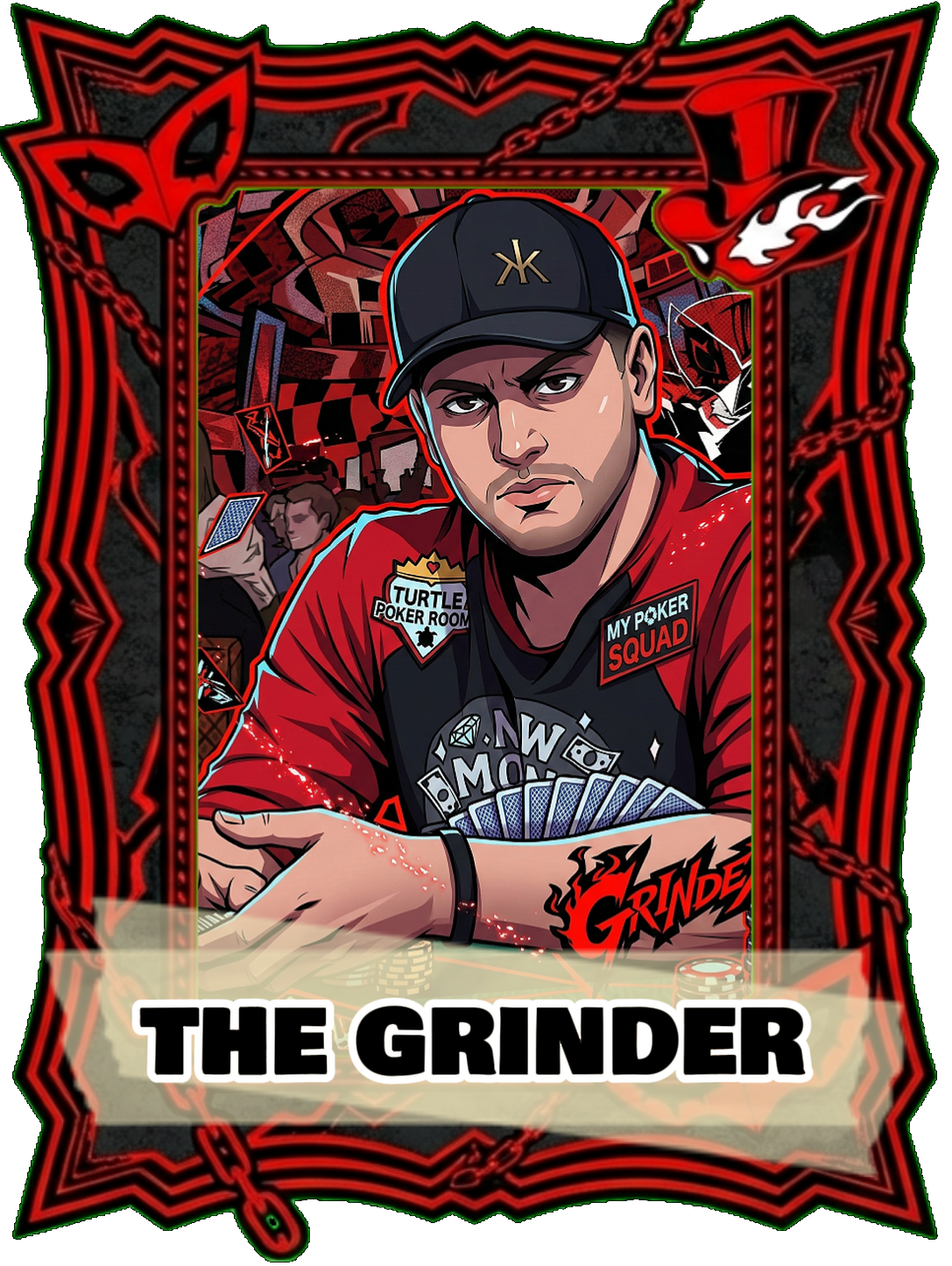
Grinder
BALANCED · BALANCED · ANY
Solid — no easy money, play your
game.
Solver Kid
BALANCED · AGGRESSIVE ·
BALANCED/SELECTIVE
Tough reg, don't get fancy.
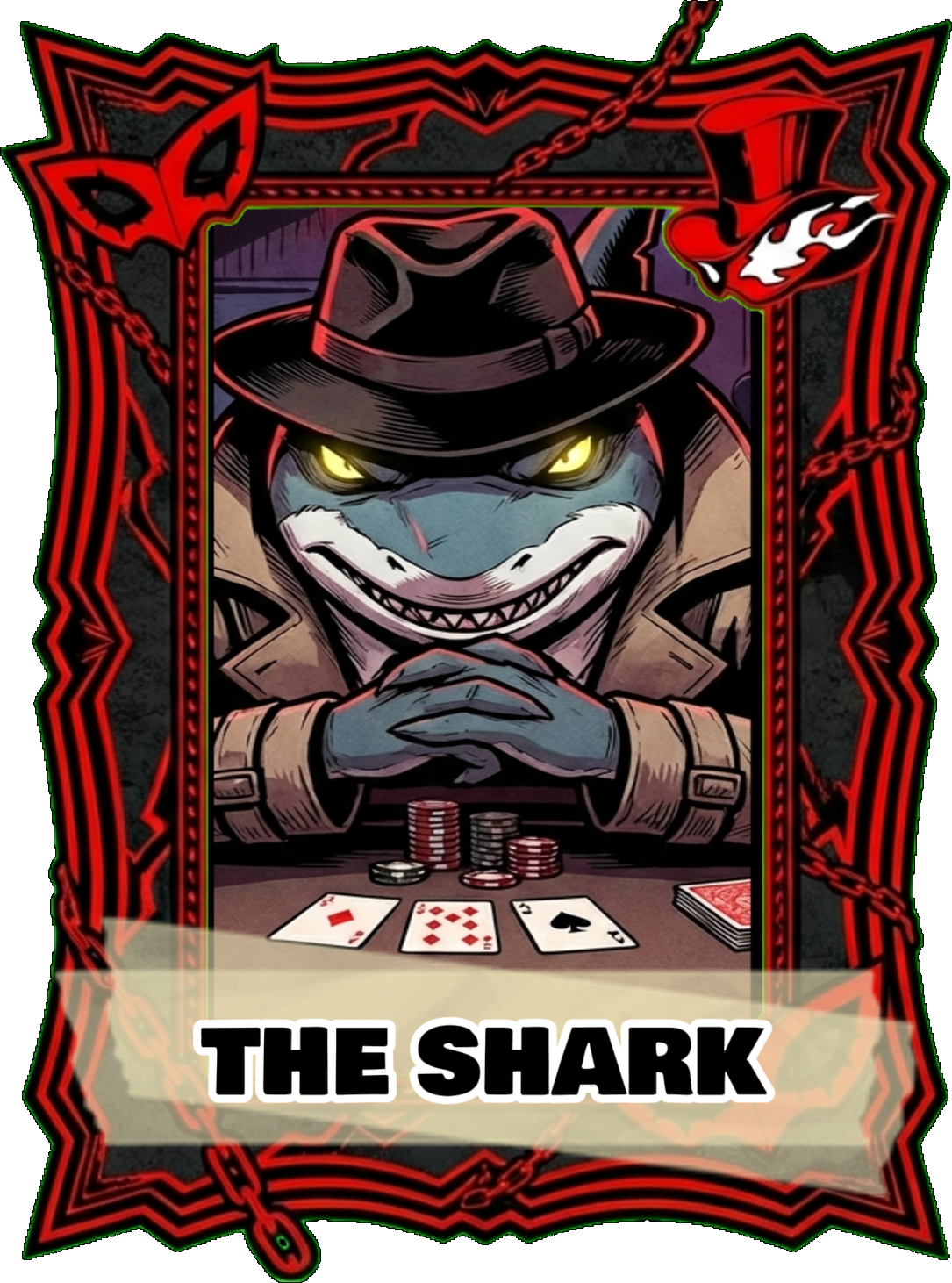
Shark
TIGHT · AGGRESSIVE ·
BALANCED/SELECTIVE
Respect their lines, avoid marginal
spots.
Stats Dictionary
Quick reference for the HUD stat
abbreviations used in reports.
VPIP
Voluntarily Put $ In Pot
% of hands played (not counting
blinds)
PFR
Preflop Raise
% of hands raised preflop
3Bet
3-Bet Preflop
% re-raised when facing a raise
4Bet+
4-Bet+ Ratio
% 4-bet or higher when facing
a 3-bet
ATS
Attempt to Steal
% raised from CO/BTN/SB when folded
to
RFI
Raise First In
% raised when first to enter
the pot
FTS
Fold to Steal
% folded in blinds vs late-position
steal
F3B
Fold to 3-Bet
% folded when facing a 3-bet
F4B
Fold to 4-Bet
% folded when facing a 4-bet
Limp
Preflop Limp
% limped (called the big blind)
preflop
CBet
C-Bet Flop
% continuation bet on the flop as
preflop raiser
FtCB
Fold to Flop CBet
% folded when facing a flop
c-bet
CR
Check-Raise
% check-raised on the flop
Float
Float Flop
% called flop then bet/raised
the turn
Donk
Donk Bet (F/T/R)
% bet into the preflop raiser
on flop, turn, or river
WTSD
Went to Showdown
% of hands that reached
showdown
W$SD
Won $ at Showdown
% won when reaching showdown
AFq
Aggression Frequency
(Bet+Raise) / (Bet+Raise+Call+Fold)
× 100
AF
Aggression Factor
(Bet+Raise) / Call — higher
= more aggressive
PA
Positional Awareness
How much tighter they play from
early position
GAP
VPIP-PFR Gap
VPIP minus PFR — high gap
= too many calls
M
M-Ratio
Stack / (Blinds+Antes) —
tournament urgency
Hands
Sample Size
Total hands tracked —
more = more reliable
How to Use
ClarityPoker is a coach in a box. Upload
your hands once a day; we triage your
leaks, queue lessons, and write you a
fresh report. Four pillars in the left
nav cover the whole app.
🏋 Training
The daily loop. Click
Training, pick your
hands.csv from PokerTracker
4, and the system runs a triage. Sally
(or your selected coach) opens a chat
with a coaching narrative naming your
biggest bleeding cluster, and 3 lesson
cards land below — the queue you'll
work next. The same upload also writes
a fresh report (next pillar).
📚 Lessons
Your authored curriculum. The
Foundation subjects
teach the cluster vocabulary itself
(Pairs, Ace-x, High-card, Connectors,
Defence, Poison). Below those, lessons
fired by triage stack up. Each lesson
opens with the leak in your numbers,
the correct play, an inline drill, and
a 7-day assignment that's measured on
your next upload.
💬 Chat
Free-form conversation with your coach.
Ask anything — "what's a Workers
cluster?", "show me the BTN range",
"review this hand history I'll paste
in." Inline grids and drill widgets
appear when relevant. Cluster names in
replies become clickable lesson links
on first occurrence.
📊 Reports
Every hands.csv you upload writes a
report row here, sorted newest first.
Click a row to see the full pretty
report — headline bb/100, the cluster
heat map (where the money lives),
top wins / top losses tables, the
cumulative arc, and the regulars who
took chips off you. Daily uploads
stack into a real history you can
scroll back through.
🔓 What's free
Everything preflop is free and
unlimited — every lesson, every
drill, your uploads, triage, reports,
and chat. Postflop, three lessons
(Rule & Retreat, No Set No Bet,
Build the Pot) are free as a taste of
Pro. Pro ($5.99/mo) unlocks postflop
coaching for every cluster.
Tools (collapsible)
Cluster Explorer —
interactive 13×13 grid colored by the
25 clusters. Board Explorer
— flop texture + range
ownership visualization.
Preflop Ranges —
solver-derived open / 3-bet / defense
charts. Flop Trainer
— drill flop family identification.
Badges — earned
achievements gallery.
Cluster Explorer
Click a cluster to highlight its hands
on the range grid. Every hand in poker
belongs to exactly one cluster.
Heuristic
Story
Strong Boards
Danger Boards
Postflop
Glossary
Quick reference for ClarityPoker
terminology and concepts.
Positions (8-max MTT)
UTG
Under the gun — first to act,
tightest range. 7 players behind,
any can 3-bet.
UTG+1
Nearly as tight as UTG. 6 players
behind. A few more suited broadways
but still playing scared of
3-bets.
Button — best position. Act
last on every postflop street. Widest
opening range.
SB
Small blind — worst postflop
position. Act first every street.
Must raise or fold.
BB
Big blind — 1bb invested.
Defends wide because of pot odds.
Mostly calling, selective
3-betting.
Frequency Words
Always
100% — play every combo.
All 4 suited, all 12 offsuit,
all 6 pairs.
Usually
67–75% — play most
combos. Skip the magic suit.
Half
50% — play half. Magic color
for suited, magic suit for
offsuit.
Sometimes
25–33% — play a small
subset. Same-color pairs,
magic-suit suited.
Stack Depths
Tiny
≤10bb — shove or fold.
No room for postflop play.
Short
11–23bb — push/fold
plus limited opens. Commit or
fold preflop.
Medium
24–80bb — standard
play. Full raise/call/fold
decisions.
Deep
80bb+ — full postflop game.
Implied odds and position matter
most.
Common Terms
RFI
Raise First In — opening
the pot with a raise when folded
to you.
VPIP
Voluntarily Put $ In Pot —
percentage of hands you play
(not counting blind posts).
PFR
Pre-Flop Raise — percentage
of hands you raise preflop.
3-bet
A re-raise over the initial raise.
Used as a bluff or for value with
premium hands.
C-bet
Continuation bet — betting
the flop after raising preflop.
Leverages range advantage.
Equity
Your share of the pot based on
your chance of winning at
showdown.
Fold Equity
The value gained when your bet
makes the opponent fold. Bigger
with weaker ranges.
Pot Odds
The ratio of the current pot to
the cost of calling. Determines
if a call is profitable.
SPR
Stack-to-Pot Ratio — stack
size divided by pot size on the
flop. Low SPR = commit or
fold.
ICM
Independent Chip Model —
converts tournament chips to
prize money equity. Changes
optimal play near the
bubble.
EV
Expected Value — the average
amount you win or lose per hand
over the long run.
Range
The set of all hands you could
hold in a given spot. GTO poker
is about playing ranges, not
single hands.
About ClarityPoker
I'm an old software guy. I've spent
30 years building systems.
When I tried to learn modern poker
theory — GTO ranges, solver
outputs, frequency matrices —
all I saw was pretty colors and math.
Hundreds of hands, dozens of
positions, thousands of decision
nodes. No structure. No story.
Just noise.
So I built one.
ClarityPoker organizes every starting
hand into 25 named clusters across 7
families. Eagles and Peacocks. Justice
League and Legion of Doom. Each
cluster has a personality, a storyline,
and a strategy you can actually
remember at the table.
Instead of memorizing that A5s is a
3-bet bluff candidate with wheel and
nut flush equity — you remember
the Phoenix, the GTO bluffing engine
that rises from the ashes.
Then I pointed an AI at real solver
data and said: read this player's
stats, compare them to what the
solver says, and tell them where
they're leaking — in plain
language, with the clusters they
already know.
That's ClarityPoker. Not a video
library. Not a solver. A coaching
tool that reads YOUR data and tells
you YOUR leaks.
This is a beta. If you're here,
someone invited you. I'd love your
feedback.
— Bassguy1965
Coming Soon
📚Cluster Coverage
Authored lessons for the
remaining 17 clusters —
Ax, broadway, suited connectors,
defence. Each fires from triage
when your hands prove the leak.
🛡️BB Defense Series
The big-blind defending playbook
against every upstream raiser. A
different shape than RFI, with a
drill kind built for it.
📈Trend Graphs
Cross-report stat trajectory on
the Reports page. Watch your
bb/100 climb (or not) across
weeks of daily uploads.
🎲Postflop Cluster Lessons
Cluster lessons extend into flop /
turn / river decision-making with
flop family overlays. Hit set, miss
set, overpair on overcard board, etc.
How It Works
Every piece of coaching in ClarityPoker
is grounded in solver math — not
AI opinion, not forum wisdom, not
vibes.
Here's the pipeline:
1
Solver runs
We run open-source GTO solvers
across every flop family, position
matchup, and pot type. Hundreds of
full game trees, computed to
near-equilibrium.
2
Pattern extraction
Raw solver output is millions of
per-combo frequencies. We aggregate
across board samples and translate
into human patterns: "always bet,"
"usually check," "mixed strategy."
The math stays; the decimals
don't.
3
Cluster mapping
Every hand belongs to one of 25
named clusters — Rockets,
Justice League, The Phoenix,
Dancing Queens. The solver tells us
what each cluster does on
every board texture. Not "AQs bets
72% for 33% pot" — but
"Peacocks are natural value bets on
ace-high boards."
4
Narrative coaching
The patterns become coaching
narratives stored in our knowledge
base. When you ask a question or
scan your table, the AI retrieves
the relevant solver-backed
narrative and delivers it in your
coach's voice. Gemini provides the
personality — the knowledge
base provides the truth.
The result: coaching that's
mathematically grounded but humanly
memorable. You don't need to read a
solver to play like one.
Principles
GTO-adjacent, not
GTO-exact
We optimize for the right direction
at every decision, not the 6th
decimal. Solvers are the source of
truth; coaching is the
translation.
Facts don't change.
Coaching does.
Board properties are permanent.
How you play them depends on
position, pot type, and opponent.
We separate the two so the system
stays honest.
Clusters over combos
169 starting hands collapse into
25 clusters with names, stories,
and personalities. A table full of
frequencies is a spreadsheet.
A table full of characters is a
strategy you remember.
Your data, your
leaks
We don't teach generic strategy.
We read your HUD stats, compare
to solver baselines, and show
you where you diverge.
The coaching is personal because
the math is personal.
Preflop Ranges
Solver-derived open-raise ranges.
Pick a position and stack depth.
Mode
Position
Raiser
Stack Depth
Flop Trainer
Given positions, pot type, and a flop
— who has range advantage?
What family? What sizing?
Position A
—
Pot Type
—
Position B
—
Nut Advantage
i
Range Advantage
i
Flop Family
i
Flush Texture
i
C-Bet Strategy
i
Board Explorer
See how board texture, ranges, and
bet sizing interact. Pick 3 cards
to build a flop.
Board Cards
Flop Bet Size
Turn Card
Turn Bet Size
Player A
Player B
Stack Depth
Board Texture
Flush Status
Downloads
Free tools and configs built while developing
ClarityPoker. Take what's useful.
Clarity HUD for PokerTracker 4
The HUD I use at the table. Three rows, three
decisions about every opponent. Built for
8-max cash and MTT. Sample sizes from 10
hands up.
One running spot, read from every chair: you
flat a UTG open on the button and see a flop
heads up. Read them in order — each session
picks up the question the last one ended on.
Every number is either solver output or
something the pool actually did — no results,
no winrates. Dark versions present well on a
screen share; light versions are for printing.
Sessions 1 and 2 are the same material — 2 is
the pool-adjusted rewrite that replaced the
original once the population data came in.
Read 2; 1 is here because people asked for it.
ClarityPoker's classifier scores players on
three independent axes: Preflop,
Streets, and
Showdown. The HUD is laid out
the same way — each row IS one of the axes.
Read the row, name the axis tendency. You
don't have to remember nine stat positions;
you have to read three rows.
1
Top row — who is this player.
Name, hand sample, and the showdown axis
at a glance. WSD > WTSD
— the gap between win-at-showdown
and went-to-showdown is the single biggest
predictor of winrate in pool data. Wide
gap (100 > 25) = tight
showdown discipline. Narrow gap
(60 > 50) = loose, calling
too light.
2
Middle row — preflop posture.
VPIP / PFR / Limp on the left
tells you the preflop axis (tight /
balanced / loose, passive / aggressive).
3b and ats on
the right tell you what to expect when
you raise into them or open in front of
them.
3
Bottom row — postflop streets.
cb (c-bet flop),
x/r (check-raise frequency),
af (aggression factor). The
streets axis — how aggressively they
continue once the flop hits. A high
c-bet + low check-raise pair is a
standard TAG; a low c-bet + any
check-raise is a trap-and-pounce type.
Color coding
Stats are color-coded by zone (tight /
balanced / loose, passive / balanced /
aggressive, stubborn / balanced / selective).
Colors use the same thresholds the
ClarityPoker classifier uses — read posture
from color, no math required. Numbers are
always shown alongside the color so the HUD
is fully readable in monochrome too.
How to install
1
In PokerTracker 4, open
Tools → HUD Options →
Edit Hud Profile.
2
Click Import at the
bottom of the HUD profile editor and
choose the
clarity-mtt.pt4hud file
you just downloaded.
3
Select the imported profile when you
attach the HUD to your table. Stats
appear in three rows once you've watched
a few hands per opponent.
Free. No login required. Built by
Tal McMahon while
designing ClarityPoker's classifier. Questions
welcome via the
feedback page.
How to Export from PokerTracker 4
ClarityPoker reads two different PT4
exports for two different purposes. Most
users only need the first one.
Hand history export (for Training)
This is the file your daily training session
uses. PT4 calls it a hands export
— one row per hand you played,
with hole cards, position, action, and
chips won. Triage parses this into a leak
queue and renders a fresh report on the
Reports page.
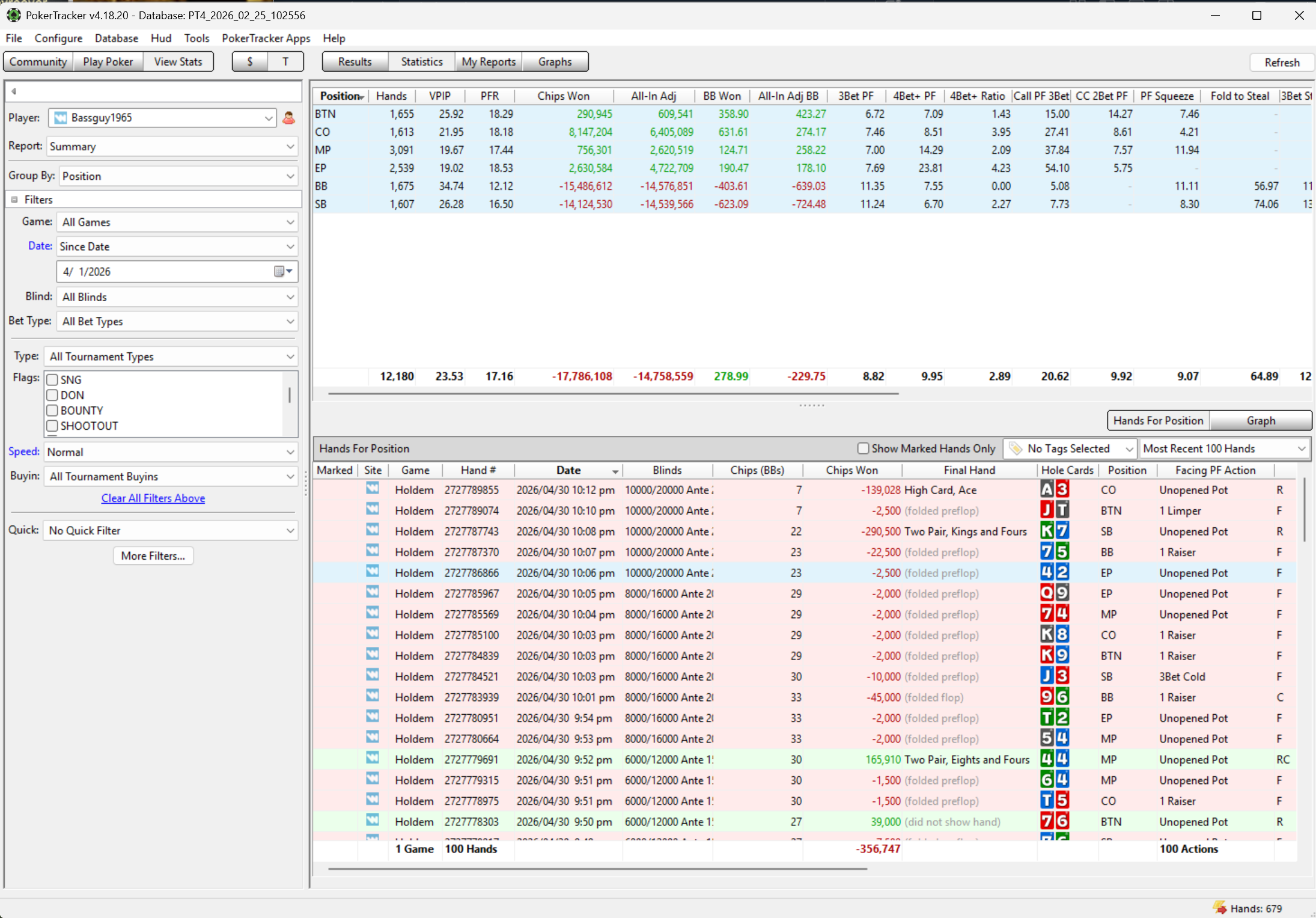
The screenshot shows the PT4 Summary view.
The top table is the stats
summary (wrong file). The
bottom panel
("Hands For Position") is the hand-by-hand
export you want.
1
In PokerTracker 4, open the
Reports → Hand
Reports tab (or the Summary
report shown above).
2
Filter to your player name
and the period you want
analyzed (last 7 days, last month,
etc.).
3
Use the bottom panel
("Hands For Position") — not the top
stats table. Set the dropdown at its
top-right from "Most Recent 100 Hands"
to Max hands, otherwise
you'll only export 100 hands.
4
Right-click that bottom panel →
Export Hands to CSV.
Save somewhere you can find it.
5
In ClarityPoker, click
Training in the left
nav. Pick the file. Sally analyzes
while triage queues your top lessons.
Tip: Re-upload daily.
Each upload writes its own report row in
your Reports history so you can watch
trends over time. Smaller, more frequent
uploads beat one giant dump.
Extra columns for the Session Review
(optional)
The Session Review works with the standard
export. Six more columns turn on the rest of
it: grouping by tournament, the overbet
rules, and bet sizes on the hands it lists.
In the same PT4 hands report, click
Edit Report → Add Stat
and add these, then export again.
Column to add
What it turns on
Tournament #
Groups hands by tournament and finds
the bust hand in each
All-In Equity
Luck line and all-in EV (already in
the standard export)
Turn Bet Facing %
River Bet Facing %
Separates a pot-size bet from an
overbet when you fold or call
Turn Bet Made %
River Bet Made %
Counts your own overbet bluffs
PT4 names can vary a little between versions
("Tourney #", "Bet Facing % (River)"). The
review accepts the common spellings. If a
row on the review still says "needs export
columns", the column name did not match;
send the header line through Feedback and
it gets added.
Terms of Service & Privacy Policy
Last updated: March 5, 2026
Terms of Service
1. Acceptance
By using ClarityPoker
(“the Service”), you agree to
these terms. If you do not agree, do not
use the Service.
2. Description
ClarityPoker is an
AI-powered poker coaching tool. It provides
strategy guidance based on solver data and
general poker theory. It is not financial
advice and does not guarantee results.
3. Accounts
You sign in via Google
OAuth. You are responsible for your account
activity. We reserve the right to suspend
accounts that violate these terms.
4. Free & Paid
Tiers
Free accounts receive
25 messages per day. Paid subscriptions
receive 200 messages per day. Payments are
processed via Stripe. Subscriptions renew
monthly and can be cancelled at any
time.
5. Acceptable Use
You may not use the
Service to: reverse-engineer our AI models
or knowledge base; automate access beyond
normal usage; harass, abuse, or spam
other users or our systems.
6. Disclaimers
The Service is provided
“as is” without warranty.
AI-generated coaching advice may contain
errors. Always use your own judgment at
the table. We are not liable for any
losses incurred from using the
Service.
7. Changes
We may update these
terms at any time. Continued use after
changes constitutes acceptance.
Privacy Policy
1. Information We Collect
Account info: Email address
and display name from Google OAuth. Usage data: Questions asked,
reports uploaded, and coaching interactions
(used to provide the service). Payment info: Handled
entirely by Stripe. We do not store credit
card numbers.
2. How We Use Your Data
To provide coaching
responses; to enforce usage limits; to
improve the service. We do not sell your
data to third parties.
3. Data Storage
Data is stored on
Google Cloud (Firebase) in the United
States. We use industry-standard security
practices.
4. Data Retention
Chat conversations are
ephemeral and not persisted after your
session ends. Uploaded CSV files are
processed in memory and not stored.
Account data is retained while your
account is active.
5. Your Rights
You may request
deletion of your account and associated
data by contacting us. We will process
requests within 30 days.
Hand your PokerTracker 4 database over to
Tal. Files up to 20 GB. Resumable — if your
connection drops, refresh and upload again
to pick up where you left off.
You need to sign in with Google before
uploading. Click the top-right user icon
to sign in.
Step 1 — Make a PT4
backup
In PT4, go to
Database → Database
Management
Select your database, click
Set Inactive (backup
requires the DB to not be active)
Click Backup... and
save the file (PT4 creates a
.zip by default)
Step 2 — Add a
quick note (optional)
So Tal knows who sent it. e.g. "Hey it's
John, this is my last 6 months."
Step 3 — Drop it
here
Drag your PT4 backup file here
or
PT4 Uploads (Admin)
Files uploaded by your friends and yourself.
Download links are signed for 1 hour from
page load.
Loading...
Report a Bug
Found something wrong? Help us improve
ClarityPoker by reporting the issue below.
One page per upload: where you went broke and
whether it was forced or a decision, a scorecard
against the rules that beat this player pool,
the hands worth talking through, and how much of
the night was the cards. Every number is counted
from your hands; nothing here is a guess.
What's New
Recent updates to ClarityPoker. The latest
changes ride at the top.
June 17, 2026 — Try the demo, no signup
You can now explore ClarityPoker without
creating an account. Hit
“Try the demo” on the
sign-in screen and you're straight into the app as a
guest — no email, no password, no setup.
Load sample hands — one click
runs a real coaching report on a sample hand history
(no PT4 export needed). You'll see the heat-map
report, the diagnosed leaks, and today's queued
lessons in seconds.
Everything is unlocked in the demo, postflop lessons
included, so you see the full coaching loop.
Perfect for showing a friend — or a stream
— what the coach actually does.
June 7, 2026 — Pot Committed & Falsely Committed
Two new Foundation lessons on stack-to-pot
ratio (SPR) and commitment — the two
opposite ways players misread the moment the money
gets big.
Pot Committed — in low-SPR pots
(3-bet and 4-bet pots) you're often committed the
moment you bet. Folding the last third of your
stack to a jam is a math error. Plan the all-in
from the flop; if you'd fold to the shove, don't
bet in the first place.
Falsely Committed — in deep,
single-raised pots the SPR is high and one pair is
a one-street hand. The chips already in the pot
are a sunk cost, not a reason to call. Fold one
pair to big deep-stack pressure; get it in only
with sets and two pair.
Each drill shows the SPR and the pot-odds price on
every spot, with foils mixed in so you have to read
the situation, not memorize a button. Find both in
Lessons → Flop → Behavioral, next
to Face Up.
May 26, 2026 — More checkout options
Subscribe with Amazon Pay,
Cash App Pay, or Link
(Stripe's one-click checkout) — plus
Google Pay and Apple Pay
on any card-supporting device. Cards still work the same
way. PayPal isn't available through Stripe for our
account yet; we'll add it when they roll it out.
May 26, 2026 — Face Up lesson + Lessons page rebuilt (v2.2.0)
New Foundation lesson: Face Up.
The most common postflop leak in tournament poker
— you don't check-raise the flop enough, and when
you do, your range is all value. Built on a
real-data finding: across 2,027 flop check-raises
in one tournament player's database,
0.2% were pure bluffs, and on
paired boards specifically the air rate was
0% across 331 events. Includes a
55-spot drill sourced from missed-X/R candidates,
a Sally + Dieter podcast, and the
You Have No Bluff Plan deck in
Downloads (18 slides with
embedded narration that auto-advances).
Lessons page rebuilt. Old
"Misplaying the Aces / Pairs / Blinds" subjects
collapsed into 5 single-axis buckets:
Foundation · Preflop · Flop · Turn · River.
Each bucket has sub-groups (Open Raises, Blind
Defense, Cluster Discipline, etc.). Every lesson
card now carries an inline Free or
Paid badge so the tier is legible
at a glance. No lesson IDs changed — completion
state preserved across the move.
May 20, 2026 — Roosters rebuilt + drill controls
The Roosters cluster (AQo / AJo / ATo) got a full
rewrite. Two new lessons replace the older
pool-derived set:
Mix Your 3-Bets (preflop) —
the color rule for offsuit ace-broadway facing
a raise. Same color = 3-bet, opposite = flat.
Two patches: ATo vs an EP/MP raise folds,
AQo leans passive when the color call is
borderline. Fold all three to any 4-bet.
Pair the Ace, Not the Kicker
(postflop) — when the flop is non-ace and you
paired your Q / J / T, your "top pair" plays as
a bluff-catcher: no blocker to villain's Ax,
no flush armor. Pot-control or fold.
Both lessons ship with a drill pulled from real
hand spots (70 preflop / 50 postflop). The drill
widget itself picked up two top-right controls:
⚡ Mega (50 hands on a 60-second
chess clock) and 🧠 Thinking
(clock off, take your time). Three older
pool-derived Roosters lessons were retired —
the new ones are solver-grounded.
May 19, 2026 — Strategy decks in Downloads
The left-nav Downloads menu
now holds more than the PT4 HUD. Three slide
decks are free to grab: BB Stack
Defence, G0 Cluster with Dangler
(c-betting connected boards vs the Big Blind),
and VPIP Is Not the Story. Built for
study groups — take what's useful.
May 15, 2026 — Free preflop + sharper
Big Blind lessons
The free tier changed shape. Instead of one
full training loop, everything
preflop is now free, forever — every
preflop lesson and its drills — plus three
full postflop lessons to show you the depth:
Rule & Retreat, No Set No
Bet, and Build the Pot. Pro
($5.99/mo) unlocks postflop coaching for every
cluster. If you were already subscribed,
nothing changes — you keep everything.
The four Big Blind defense lessons were
rebuilt. They no longer chase a defense
percentage — they teach the actual
fold list and which bucket
each hand belongs in (fold, 3-bet, jam, or
flat). Short, medium, deep, and a Tier-2
lesson on reading the opener. Each one now
carries an inline pressure drill — a clock,
a streak, and a recap at the end — and a
re-recorded podcast.
May 6, 2026 — Lesson podcasts
Each lesson now has an audio companion. Click
the 🎧 Listen button on any
lesson tile to hear Sally and Dieter walk
through the cluster — strategy, the data,
and the takeaway action. 22 episodes shipped
in this batch covering the Foundation lessons,
the Pairs cluster series (Rockets, Dictators,
Guards, Working Class, Underground), and
position-specific opens.
Listen on lesson tiles in Active
Lessons and the Lessons page
Inline player — click Listen, click Hide
About seven to ten minutes per episode
May 2, 2026 — Awards system
Replaced the old frequency-based challenges
with auto-firing achievements. The triage
that runs after each upload also runs the
awards catalog — you don't accept anything,
you don't claim anything. The achievement
just unlocks. 33 awards in v1 covering app
activity, summary milestones, and hand-by-hand
discipline. Existing badges merged in too —
same gallery, new engine. A bonk-toast
notification fires when something unlocks.
April 30, 2026 — Paywall + report rebuild
The first full training loop is now free for
everyone — upload, get your report, work
through your first lesson. After that, the
subscription unlocks unlimited training
sessions and the Tier 2 lesson library.
Reports also got a major redesign — the
friend-report shape with cluster heat map,
top wins, top losses, archetype matchups,
and a cumulative-bb arc.